
The Bigger Story (Part 2) "When My Scene Ends"
Five-Day Bible Reading Plan and Devotional Guide
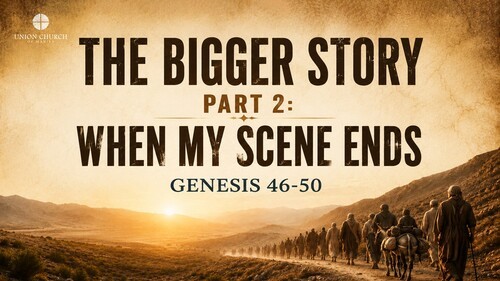
The Bigger Story (Part 2) When My Scene Ends: Genesis 46-50
Day 1: The Hard Road and the Rest That Awaits
Read: Ecclesiastes 2:23, Ecclesiastes 3:10, Revelation 14:13
The Bigger Story (Part 2) When My Scene Ends: Genesis 46-50
Day 1: The Hard Road and the Rest That Awaits
Read: Ecclesiastes 2:23, Ecclesiastes 3:10, Revelation 14:13
Life is not a luxury cruise. Scripture is honest about the weight of our days on this fallen earth. The road we travel is marked by struggle, grief, disappointment, and weariness. Yet the believer does not carry this weight without hope. Revelation 14:13 promises rest for those who die in the Lord — rest from their labor, their striving, their long fight. Jacob surveyed 130 hard years and was not bitter. He was ready. When we acknowledge the difficulty of life honestly rather than pretending it away, we position ourselves to genuinely long for what God has prepared beyond it. The Christian does not fear the end of the struggle. He trusts the One who waits on the other side of it.
Personal Reflection:
Where in your life are you most aware of the weight of the struggle? Have you brought that weariness honestly before God? How does the promise of rest change the way you carry today's burdens?
Where in your life are you most aware of the weight of the struggle? Have you brought that weariness honestly before God? How does the promise of rest change the way you carry today's burdens?
Practical Application:
Write down one area of life where you have been exhausted by the long fight. Spend time in prayer today surrendering that specific burden to God, and ask Him to give you a fresh awareness of the rest He promises to those who trust Him.
Write down one area of life where you have been exhausted by the long fight. Spend time in prayer today surrendering that specific burden to God, and ask Him to give you a fresh awareness of the rest He promises to those who trust Him.
Day 2: Confidence in What Comes Next
Read: Genesis 49:33, Daniel 12:13, John 14:1-3
Read: Genesis 49:33, Daniel 12:13, John 14:1-3
Jacob breathed his last and was gathered to his people. Even in an age before the full revelation of Christ, the patriarchs held a basic but genuine confidence that death was not the end of the story. Daniel was promised that he would rest and then rise to receive his inheritance. Jesus, in the upper room on the night before His own death, spoke plainly to His disciples about the place He was going to prepare for them. The peace that marked the deaths of men and women of deep faith across the centuries was not wishful thinking. It was theological certainty rooted in the character of a God who keeps every promise He makes. Confidence in the next chapter of God's story transforms the way we face the final page of this one.
Personal Reflection:
How confident are you, honestly, in what awaits you beyond death? Is your confidence rooted in the promises of Scripture, or does it waver depending on how life feels in a given season?
How confident are you, honestly, in what awaits you beyond death? Is your confidence rooted in the promises of Scripture, or does it waver depending on how life feels in a given season?
Practical Application:
Memorize or meditate on one specific promise from Scripture about eternal life today. Write it somewhere visible and return to it throughout the week as an anchor for your confidence.
Memorize or meditate on one specific promise from Scripture about eternal life today. Write it somewhere visible and return to it throughout the week as an anchor for your confidence.
Day 3: The Greatest Legacy We Leave Behind
Read: Genesis 48:1-4, 2 Timothy 4:6-7, Psalm 78:4-7
Read: Genesis 48:1-4, 2 Timothy 4:6-7, Psalm 78:4-7
When Jacob summoned his remaining strength to sit up in his bed and speak to Joseph, he did not begin with property, documents, or possessions. He began with the covenant. He declared what God had said, what God had promised, and what God had done. Paul, facing execution, did not lament what he was leaving behind. He declared that he had fought the good fight, finished the race, and kept the faith. Psalm 78 calls every generation to tell the next generation the praiseworthy deeds of the Lord. The most powerful inheritance we can leave our children and grandchildren is not financial security. It is an unshakeable testimony that our Redeemer is faithful and true. Stories of answered prayer, of grace in suffering, of promises that never failed — these are the riches that outlast every earthly estate.
Personal Reflection:
What stories of God's faithfulness have you regularly shared with the people who will outlive you? Are the people closest to you more aware of your accomplishments or of your confidence in God?
What stories of God's faithfulness have you regularly shared with the people who will outlive you? Are the people closest to you more aware of your accomplishments or of your confidence in God?
Practical Application:
Identify one specific story of God's faithfulness in your life — a moment of provision, answered prayer, or grace in suffering. Share that story this week with a child, grandchild, or younger believer who needs to hear it.
Identify one specific story of God's faithfulness in your life — a moment of provision, answered prayer, or grace in suffering. Share that story this week with a child, grandchild, or younger believer who needs to hear it.
Day 4: Preparing Well Is an Act of Love
Read: Genesis 49:28-30, Genesis 50:12-14, Proverbs 13:22
Read: Genesis 49:28-30, Genesis 50:12-14, Proverbs 13:22
Jacob did not leave his sons to guess, argue, or divide after his death. He gathered them together, spoke clearly, and laid out exactly what he wanted. The result was unity. His sons traveled together, buried him together, and returned together. Preparation for death is not a morbid exercise. It is an act of love toward the people whose stories will continue after yours ends. When believers are genuinely at peace with their own departure, they are freed to think clearly and practically about how to bless those they leave behind. Refusing to plan because the subject is uncomfortable often leaves families fractured, grieving, and confused at the very moment they most need stability. Peace with God about death produces the clarity to provide peace for others after death.
Personal Reflection:
Have you avoided practical conversations or preparations related to your death out of fear or discomfort? What would it look like to approach those conversations as an act of love rather than a concession to fear?
Have you avoided practical conversations or preparations related to your death out of fear or discomfort? What would it look like to approach those conversations as an act of love rather than a concession to fear?
Practical Application:
Take one concrete step this week toward practical preparation — whether that means drafting a will, writing down your final wishes, or simply having an honest conversation with a trusted family member about what you would want. Frame it as a gift to those you love.
Take one concrete step this week toward practical preparation — whether that means drafting a will, writing down your final wishes, or simply having an honest conversation with a trusted family member about what you would want. Frame it as a gift to those you love.
Day 5: All Is Well — Dying in Peace and Faith
Read: Luke 2:29-30, Philippians 1:21-23, 2 Timothy 1:12
Read: Luke 2:29-30, Philippians 1:21-23, 2 Timothy 1:12
Simeon had waited his entire life for the consolation of Israel. When he held the infant Jesus in his arms, he was ready to depart in peace because he had seen the fulfillment of God's promise with his own eyes. Paul told the Philippians that to die was gain — not loss, not defeat, not tragedy — gain. The accounts of believers throughout history who faced death with peace, even joy, were not performing courage. They were simply living out the logical conclusion of a faith that had been tested, proven, and found unshakeable. When we know the One who holds the story, we do not have to fear the moment our scene ends. We can say with full confidence: all is well. Not because life was easy, but because the God who wrote us into His story is faithful to complete every word He has spoken.
Personal Reflection:
If today were your final day, what would mark your departure — fear or peace? What does your honest answer reveal about where your confidence truly rests?
If today were your final day, what would mark your departure — fear or peace? What does your honest answer reveal about where your confidence truly rests?
Practical Application:
Write a brief letter to someone you love — a child, a grandchild, a close friend — telling them of God's faithfulness in your life and expressing your confidence in His promises. You do not have to be near death to write it. Jacob's greatest words were spoken while he still had breath to speak them.
Write a brief letter to someone you love — a child, a grandchild, a close friend — telling them of God's faithfulness in your life and expressing your confidence in His promises. You do not have to be near death to write it. Jacob's greatest words were spoken while he still had breath to speak them.