
Declare His Glory Among The Nations
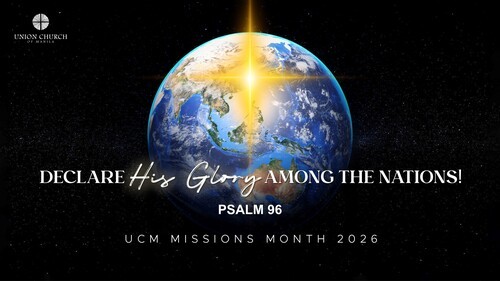
Five-Day Bible Reading Plan: God's Glory Among the Nations
Based on Psalm 96 and the themes of God's heart for the world, His salvation, His majesty, and the call to declare His glory to every people and nation.
Day 1: A God Whose Glory Fills the Earth
Read: Psalm 96:1-6
The ancient world was crowded with small gods — gods of rain, gods of harvest, gods of war. Each one was local, limited, and ultimately powerless. Into that world, Psalm 96 thunders a different announcement: there is one God whose splendor and majesty surpass every rival, every idol, every competing claim. He did not merely influence the heavens — He made them. His glory is not confined to a temple, a nation, or a tradition. It covers the earth the way water covers the ocean floor — completely, without exception, reaching into every corner.
The question this raises is personal before it is missional. Do you actually live as though God is that magnificent? It is easy to reduce God to the size of our problems, our routines, our comfort zones. We speak of Him politely, reference Him occasionally, and treat His glory as one item among many on our weekly schedule. But Psalm 96 does not present a polite God. It presents a God so vast in majesty that the only appropriate response is a new song — something fresh, something that breaks out of the ordinary, because the ordinary cannot contain what He is.
Personal Reflection: In what areas of your life have you made God smaller than He actually is? Where have you allowed familiarity to dull your sense of His majesty?
Practical Application: Set aside ten minutes today to list five specific attributes of God that genuinely move you. Do not rush through the list. Sit with each one and let it stir something in you before moving to the next.
Day 2: The Song That Was Always Meant to Travel
Read: Psalm 96:7-10; Genesis 12:1-3
When God called Abraham in Genesis 12, He made a promise that was never meant to stop with one man or one family. The blessing flowing through Abraham was always destined for every family on earth. Psalm 96 is that promise set to music. "Ascribe to the LORD, O families of the peoples" — the invitation goes out beyond Israel, beyond the tabernacle, beyond any single culture or congregation. The worship that began in one place was always designed to travel.
This is the thread that runs from Abraham's call to the great commission to the final scene in Revelation 7, where a multitude from every nation stands before the throne. God's plan was never small. He was not building a private club for a select group of worshippers. He was gathering a choir from every corner of the earth. The question is whether we understand ourselves as participants in that gathering. Every believer carries the invitation. Every congregation is a staging ground. The song was always meant to travel, and we are the ones carrying it.
Personal Reflection: When you think about the global scope of God's mission, do you feel connected to it or distant from it? What has shaped that sense of connection or disconnection?
Practical Application: Go to operationworld.org. Research one unreached people group today. Learn their name, their location, and something about their culture. Pray specifically for them by name, asking God to send workers and open hearts among them.
Day 3: Telling His Salvation Day by Day
Read: Psalm 96:2; 1 Peter 1:10-12; John 11:25-26
The instruction in Psalm 96 carries a rhythm that is easy to overlook: "tell of his salvation from day to day." Not once a year at a church conference. Not whenever the mood strikes. Day by day. The implication is that salvation is not a one-time transaction to be filed away in the past — it is a living reality so extraordinary that it deserves to be spoken of continuously. The apostle Peter reminds us in 1 Peter 1 that the angels themselves long to look into these things. Heaven has not grown bored with the story of redemption. Neither should we.
Salvation, as Psalm 96 frames it, is larger than a single moment of conversion. It includes God's faithfulness in rescuing His people throughout history, the resurrection life promised to every believer in Christ, and the final restoration of all creation described in Isaiah 11 — a world where every trace of injustice and decay is gone forever. You carry a story that is bigger than any headline, more enduring than any earthly achievement, and more personally relevant to every human being you will encounter today than anything else you could offer them.
Personal Reflection: When did you last speak of God's salvation to someone outside your church community? What holds you back from telling it more naturally and more often?
Practical Application: Write down one specific way God has saved you — from a situation, a season of despair, or a pattern of sin. Share that story with at least one person this week, not as a formal gospel presentation, but as a natural conversation about what God has done.
Day 4: The Judge the World Has Been Waiting For
Read: Psalm 96:10-13; Romans 3:25-26; Revelation 7:9-17
The word "judgment" makes many people instinctively uncomfortable, and understandably so. We have all experienced judgment that was corrupt, biased, excessive, or motivated by self-interest. Psalm 96, however, places the announcement of God's coming judgment inside a song of celebration. The nations are not warned to flee — they are invited to sing. Why? Because the judgment described here is unlike anything the world has ever seen from any human court or ruler.
He will judge "with equity, in righteousness, in faithfulness." Every person weighed by the same standard. No bribe accepted, no powerful interest protected, no victim silenced. The story of the king who shielded his daughter from the sentence that justice demanded — absorbing forty lashes himself so that both love and justice could be fully satisfied — is not merely an illustration. It is a shadow of what God accomplished in Christ. The penalty for sin was real. It was not waived or overlooked. It was carried by the one who had the authority to demand it. That is the judge the nations have been longing for without knowing His name. And we have been given the privilege of telling them who He is.
Personal Reflection: Where in your life — in your community, your nation, or the world — do you feel the weight of injustice most acutely? How does the promise of God's perfect judgment speak into that specific grief?
Practical Application: The Apostles' Creed and the Nicene Creed both confess that Christ will come to judge the living and the dead. Recite one of these creeds slowly today, pausing at that phrase. Consider what it means to confess this not only inside a church building but as a statement of conviction you carry into the world.
Day 5: The Nations Have Been Brought to You
Read: Psalm 96:1-13; Revelation 7:9-10; Matthew 28:18-20
David Livingstone heard Robert Moffat describe pillars of smoke rising from villages across the African interior — communities where no one had ever spoken the name of Jesus — and he was undone. He gave the rest of his life to crossing that distance, at enormous personal cost, because the glory of God had not yet reached those fires. His story is extraordinary. But the principle behind it is not reserved for extraordinary people. It belongs to every believer.
You may not cross a continent. But God, in His sovereignty, has arranged your life so that the nations have come to you. The city you live in, the workplace you occupy, the neighborhood you call home — these are not random. They are the territory God has placed you in, and within that territory there are people who have not yet heard of His glory, His salvation, or His perfect justice. Psalm 96 ends not with a conclusion but with an open door — the nations invited to worship, the earth called to join the song. That invitation does not go out by itself. It goes out through people who have heard it and cannot keep it to themselves.
John Piper's observation is worth carrying with you: missions exists because worship does not yet exist everywhere. One day it will. One day every nation, tribe, people, and language will stand before the throne and cry out that salvation belongs to God. Until that day, the song is still traveling. You are part of how it gets there.
Personal Reflection: What specific people in your immediate life — neighbors, coworkers, family members — have not yet heard the gospel? What is one concrete step you can take this week to move toward them with intentionality?
Practical Application: Pray the words of Psalm 96:3 over your own life today, asking God to make you someone who genuinely declares His glory and His marvelous works — not only in distant places, but in the ordinary, daily territory He has already given you. Then go live that prayer.
Based on Psalm 96 and the themes of God's heart for the world, His salvation, His majesty, and the call to declare His glory to every people and nation.
Day 1: A God Whose Glory Fills the Earth
Read: Psalm 96:1-6
The ancient world was crowded with small gods — gods of rain, gods of harvest, gods of war. Each one was local, limited, and ultimately powerless. Into that world, Psalm 96 thunders a different announcement: there is one God whose splendor and majesty surpass every rival, every idol, every competing claim. He did not merely influence the heavens — He made them. His glory is not confined to a temple, a nation, or a tradition. It covers the earth the way water covers the ocean floor — completely, without exception, reaching into every corner.
The question this raises is personal before it is missional. Do you actually live as though God is that magnificent? It is easy to reduce God to the size of our problems, our routines, our comfort zones. We speak of Him politely, reference Him occasionally, and treat His glory as one item among many on our weekly schedule. But Psalm 96 does not present a polite God. It presents a God so vast in majesty that the only appropriate response is a new song — something fresh, something that breaks out of the ordinary, because the ordinary cannot contain what He is.
Personal Reflection: In what areas of your life have you made God smaller than He actually is? Where have you allowed familiarity to dull your sense of His majesty?
Practical Application: Set aside ten minutes today to list five specific attributes of God that genuinely move you. Do not rush through the list. Sit with each one and let it stir something in you before moving to the next.
Day 2: The Song That Was Always Meant to Travel
Read: Psalm 96:7-10; Genesis 12:1-3
When God called Abraham in Genesis 12, He made a promise that was never meant to stop with one man or one family. The blessing flowing through Abraham was always destined for every family on earth. Psalm 96 is that promise set to music. "Ascribe to the LORD, O families of the peoples" — the invitation goes out beyond Israel, beyond the tabernacle, beyond any single culture or congregation. The worship that began in one place was always designed to travel.
This is the thread that runs from Abraham's call to the great commission to the final scene in Revelation 7, where a multitude from every nation stands before the throne. God's plan was never small. He was not building a private club for a select group of worshippers. He was gathering a choir from every corner of the earth. The question is whether we understand ourselves as participants in that gathering. Every believer carries the invitation. Every congregation is a staging ground. The song was always meant to travel, and we are the ones carrying it.
Personal Reflection: When you think about the global scope of God's mission, do you feel connected to it or distant from it? What has shaped that sense of connection or disconnection?
Practical Application: Go to operationworld.org. Research one unreached people group today. Learn their name, their location, and something about their culture. Pray specifically for them by name, asking God to send workers and open hearts among them.
Day 3: Telling His Salvation Day by Day
Read: Psalm 96:2; 1 Peter 1:10-12; John 11:25-26
The instruction in Psalm 96 carries a rhythm that is easy to overlook: "tell of his salvation from day to day." Not once a year at a church conference. Not whenever the mood strikes. Day by day. The implication is that salvation is not a one-time transaction to be filed away in the past — it is a living reality so extraordinary that it deserves to be spoken of continuously. The apostle Peter reminds us in 1 Peter 1 that the angels themselves long to look into these things. Heaven has not grown bored with the story of redemption. Neither should we.
Salvation, as Psalm 96 frames it, is larger than a single moment of conversion. It includes God's faithfulness in rescuing His people throughout history, the resurrection life promised to every believer in Christ, and the final restoration of all creation described in Isaiah 11 — a world where every trace of injustice and decay is gone forever. You carry a story that is bigger than any headline, more enduring than any earthly achievement, and more personally relevant to every human being you will encounter today than anything else you could offer them.
Personal Reflection: When did you last speak of God's salvation to someone outside your church community? What holds you back from telling it more naturally and more often?
Practical Application: Write down one specific way God has saved you — from a situation, a season of despair, or a pattern of sin. Share that story with at least one person this week, not as a formal gospel presentation, but as a natural conversation about what God has done.
Day 4: The Judge the World Has Been Waiting For
Read: Psalm 96:10-13; Romans 3:25-26; Revelation 7:9-17
The word "judgment" makes many people instinctively uncomfortable, and understandably so. We have all experienced judgment that was corrupt, biased, excessive, or motivated by self-interest. Psalm 96, however, places the announcement of God's coming judgment inside a song of celebration. The nations are not warned to flee — they are invited to sing. Why? Because the judgment described here is unlike anything the world has ever seen from any human court or ruler.
He will judge "with equity, in righteousness, in faithfulness." Every person weighed by the same standard. No bribe accepted, no powerful interest protected, no victim silenced. The story of the king who shielded his daughter from the sentence that justice demanded — absorbing forty lashes himself so that both love and justice could be fully satisfied — is not merely an illustration. It is a shadow of what God accomplished in Christ. The penalty for sin was real. It was not waived or overlooked. It was carried by the one who had the authority to demand it. That is the judge the nations have been longing for without knowing His name. And we have been given the privilege of telling them who He is.
Personal Reflection: Where in your life — in your community, your nation, or the world — do you feel the weight of injustice most acutely? How does the promise of God's perfect judgment speak into that specific grief?
Practical Application: The Apostles' Creed and the Nicene Creed both confess that Christ will come to judge the living and the dead. Recite one of these creeds slowly today, pausing at that phrase. Consider what it means to confess this not only inside a church building but as a statement of conviction you carry into the world.
Day 5: The Nations Have Been Brought to You
Read: Psalm 96:1-13; Revelation 7:9-10; Matthew 28:18-20
David Livingstone heard Robert Moffat describe pillars of smoke rising from villages across the African interior — communities where no one had ever spoken the name of Jesus — and he was undone. He gave the rest of his life to crossing that distance, at enormous personal cost, because the glory of God had not yet reached those fires. His story is extraordinary. But the principle behind it is not reserved for extraordinary people. It belongs to every believer.
You may not cross a continent. But God, in His sovereignty, has arranged your life so that the nations have come to you. The city you live in, the workplace you occupy, the neighborhood you call home — these are not random. They are the territory God has placed you in, and within that territory there are people who have not yet heard of His glory, His salvation, or His perfect justice. Psalm 96 ends not with a conclusion but with an open door — the nations invited to worship, the earth called to join the song. That invitation does not go out by itself. It goes out through people who have heard it and cannot keep it to themselves.
John Piper's observation is worth carrying with you: missions exists because worship does not yet exist everywhere. One day it will. One day every nation, tribe, people, and language will stand before the throne and cry out that salvation belongs to God. Until that day, the song is still traveling. You are part of how it gets there.
Personal Reflection: What specific people in your immediate life — neighbors, coworkers, family members — have not yet heard the gospel? What is one concrete step you can take this week to move toward them with intentionality?
Practical Application: Pray the words of Psalm 96:3 over your own life today, asking God to make you someone who genuinely declares His glory and His marvelous works — not only in distant places, but in the ordinary, daily territory He has already given you. Then go live that prayer.